
Pain Management
Interventional Pain Management
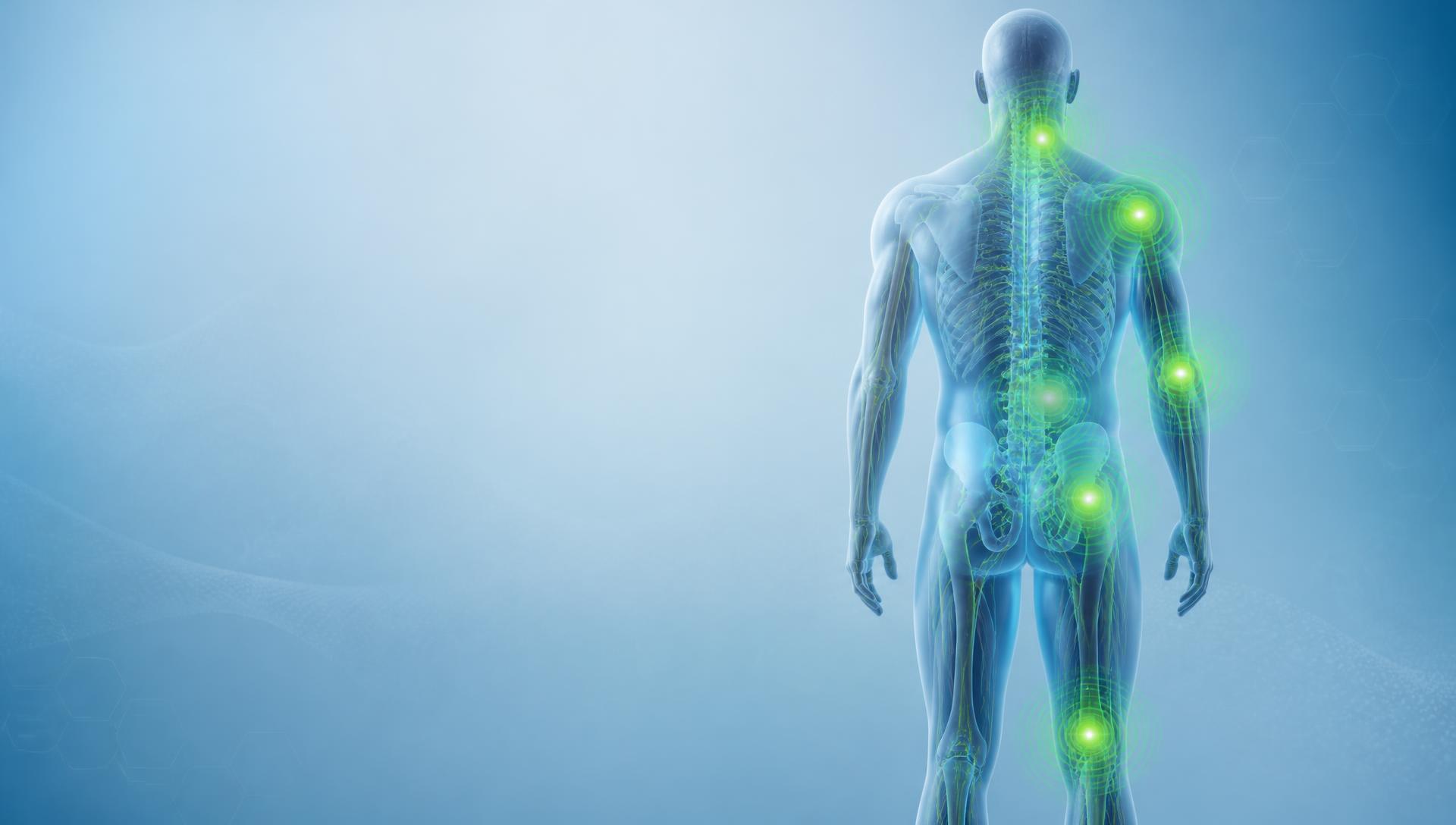
Image-guided, non-surgical approaches to joint, tendon, and spine pain — with realistic expectations set up front.
Our pain program combines diagnostic imaging, movement assessment, and targeted interventional procedures. The goal is functional restoration: getting a joint, tendon, or segment to tolerate load again.
We are candid about the evidence. Some interventions have strong randomized data behind them; others are emerging and are offered only after a documented conversation about what is known, what is unknown, and what alternatives exist — including surgical referral when that is the better path.
What we treat
We see patients with chronic or recurrent pain in the spine, hips, knees, shoulders, elbows, wrists, ankles, and feet. Common presentations include osteoarthritis, tendinopathy, ligament sprains, plantar fasciitis, sacroiliac dysfunction, and persistent post-surgical pain.
How we evaluate
Every plan starts with a focused history and a hands-on exam. We review prior imaging, assess movement quality, identify load-intolerant positions, and use in-office diagnostic ultrasound when it changes the plan. Blood work may be ordered if biologic therapy is being considered.
Image-guided procedures
Ultrasound guidance lets us place therapy precisely into the affected joint, tendon sheath, bursa, or ligament. Procedures are performed in the office and are chosen only after the diagnosis and target tissue are clearly identified.
- Ultrasound-guided joint and soft tissue injections
- Prolotherapy for ligament and tendon laxity
- Platelet-rich plasma (PRP) drawn and processed on-site
- Extracorporeal shockwave therapy for chronic tendinopathy
- Percutaneous soft-tissue release and needling under ultrasound
Biologic and regenerative options
When appropriate, we discuss cell-based and biologic therapies. We review the current evidence, FDA status, risks, benefits, and expected timelines so you can make an informed decision. These options are not a fit for every condition and are never presented as a guaranteed cure.
- Autologous platelet-derived therapies
- Cell-based therapies where clinically indicated
- Adjunctive peptide protocols coordinated through Dr. Peptide
Rehabilitation and load progression
Procedures are only one part of recovery. We pair interventions with structured rehab: manual therapy, graded loading, strength work, and return-to-activity planning. The goal is durable function, not just short-term pain relief.
When we refer
Some conditions are better served by surgery, neurology, rheumatology, or pain-anesthesia. We coordinate directly with outside specialists when imaging, exam findings, or failed prior care suggest that another path is safer or more effective.
Educational guide
Pain flare map
Pain rarely appears at random. The location of a flare-up tells us which tissue, joint, or movement pattern is overloaded. Below are the most common areas we evaluate and what your visit will focus on.
Neck
Cervical pain often links to posture, screen time, or prior whiplash. We check segmental mobility, nerve tension signs, and muscle endurance before deciding whether an injection, manual therapy, or rehab is the right first step.
Shoulder
The shoulder is a complex of four joints and a rotator cuff. We differentiate between impingement, tendinopathy, instability, and referred neck pain. In-office ultrasound is often the fastest way to confirm the target tissue.
Back
Back pain can come from discs, facet joints, muscles, or the sacroiliac joint. We look for directional preference, nerve involvement, and load tolerance. Imaging is reviewed, but movement testing is what guides the injection plan.
Hip
Hip pain may be intra-articular arthritis, labral irritation, or referred from the lumbar spine or SI joint. We test range of motion, gait, and hip-abductor strength. Ultrasound confirms whether the joint, bursa, or tendon is the source.
Knee
Knee pain commonly involves osteoarthritis, meniscal irritation, or patellar tendinopathy. We assess swelling, alignment, ligament integrity, and quad control. Image-guided injections can target the joint, tendon, or bursa precisely.
Elbow
Elbow pain is frequently tendinopathy on the inner or outer elbow, or ulnar nerve irritation. We examine grip, wrist mechanics, and tendon load tolerance. Local therapy plus forearm rehab is usually more effective than rest alone.
This map is for educational and informational purposes only. It is not a diagnostic tool. A licensed provider must evaluate your symptoms before any treatment plan is started.
Peptide Library
Peptide Library — recovery & pain topics
A curated slice of the peptide reference library covering compounds most often discussed in tissue repair, recovery, and pain-related research. Reference material only.
- BPC-157RecoveryBody Protection Compound for tissue repair, gut healing, and recoveryStudied for soft-tissue and tendon repair signaling.
- TB-500RecoveryThymosin Beta-4 for tissue repair and wound healingResearched for cell migration and connective-tissue recovery.
- MGFRecoveryMechano growth factor for muscle repair and growthReviewed for local muscle repair after mechanical load.
- GHK-CuSkin & BeautyCopper peptide for skin regeneration and tissue repairStudied for collagen remodeling and wound signaling.
- KPVImmuneAnti-inflammatory peptide for gut health and immune modulationResearched for inflammatory signaling modulation.
- IpamorelinGrowth HormoneSelective growth hormone secretagogue with minimal side effectsReviewed in the context of recovery and sleep quality.
Listed for informational and educational purposes only. Inclusion is not medical advice and not an endorsement of any compound, product, device, pharmacy, or supplier. Many of these compounds are not FDA approved for human use. A licensed practitioner must evaluate you before any therapy is considered.
Appointment request
Request a pain management evaluation
Tell us where it hurts and what you've already tried. This form is a request for an evaluation — it does not schedule a procedure and is not a substitute for medical advice.
Privacy. The details you submit are used only to contact you and prepare for your evaluation. We do not sell or share your information with advertisers. Email and web forms are not fully secure channels — please keep clinical detail general here and save specifics for your visit. If this is a medical emergency, call 911.
What to expect
- Ultrasound-guided joint and soft tissue procedures
- Biologic options discussed with current evidence
- Movement and load-tolerance rehabilitation
- Coordinated referral when surgery is indicated
Informational disclaimer
The information on this page is for educational and informational purposes only. It describes services offered at Dallas Regenerative Center and does not constitute medical advice, a diagnosis, or a treatment recommendation. Individual results vary, and not all procedures are appropriate for every patient. A licensed provider must evaluate your specific condition before any treatment plan is started.
Frequently asked questions
About interventional pain management
- Who is eligible for regenerative pain management?
- Good candidates generally have a defined joint, tendon, or soft-tissue pain source that has been evaluated by a clinician. We review imaging, prior treatments, medications, and overall health. Regenerative options are not appropriate for active infection, certain blood disorders, cancer in the treatment area, or for anyone seeking a guaranteed cure. A consultation helps determine whether the approach fits your specific diagnosis and stage.
- How many sessions are typically needed?
- It depends on the treatment and the condition. Image-guided injections such as PRP are commonly planned as a short series — often one to three sessions spaced several weeks apart — with reassessment before any additional session. Shockwave and laser protocols are typically delivered in three to six visits. Biologic or device-based care is almost always part of a larger rehabilitation plan rather than a single visit.
- What is the recovery time?
- Most patients can return to light activities the same day or within 24–48 hours. Temporary soreness, swelling, or stiffness at the injection or treatment site is common for several days. Higher-load exercise or heavy lifting is usually postponed for one to two weeks, depending on the area treated. We give written aftercare instructions and schedule a follow-up to track functional change, not just symptom relief.
- When should I seek medical care urgently?
- Seek urgent or emergency care for sudden severe pain after a procedure, fever or chills, spreading redness or warmth, rapidly increasing swelling, numbness or weakness in a limb, loss of bladder or bowel control, chest pain, shortness of breath, or any symptoms that feel dramatically worse rather than gradually improving. For non-urgent questions after a visit, contact the clinic directly or schedule a follow-up.
- Are results guaranteed for pain management?
- No. Response to any regenerative or interventional pain procedure varies by age, tissue health, injury duration, activity level, and whether the underlying structure is mechanically intact. Some patients notice functional improvement within weeks; others may see more gradual change over months. We measure progress on activity tolerance and set realistic expectations before treatment begins.
These answers are for educational and informational purposes only. They do not replace a clinical evaluation of your specific condition. Please consult a qualified provider for personalized guidance.
Related services
Programs patients most often combine with this one.
Functional Wellness
Functional & Longevity Medicine
Genomic testing, advanced biomarker panels, and hormone optimization built into one longitudinal plan.
View Service DetailsRegenerative Aesthetics
Regenerative Aesthetics
Collagen-forward skin treatments designed for gradual, natural results rather than dramatic single-visit change.
View Service DetailsRegenerative Aesthetics
Microneedling (Collagen Induction Therapy)
A minimally invasive treatment that uses controlled micro-injury to prompt the skin's own collagen response.
View Service Details